

Rupert Spira
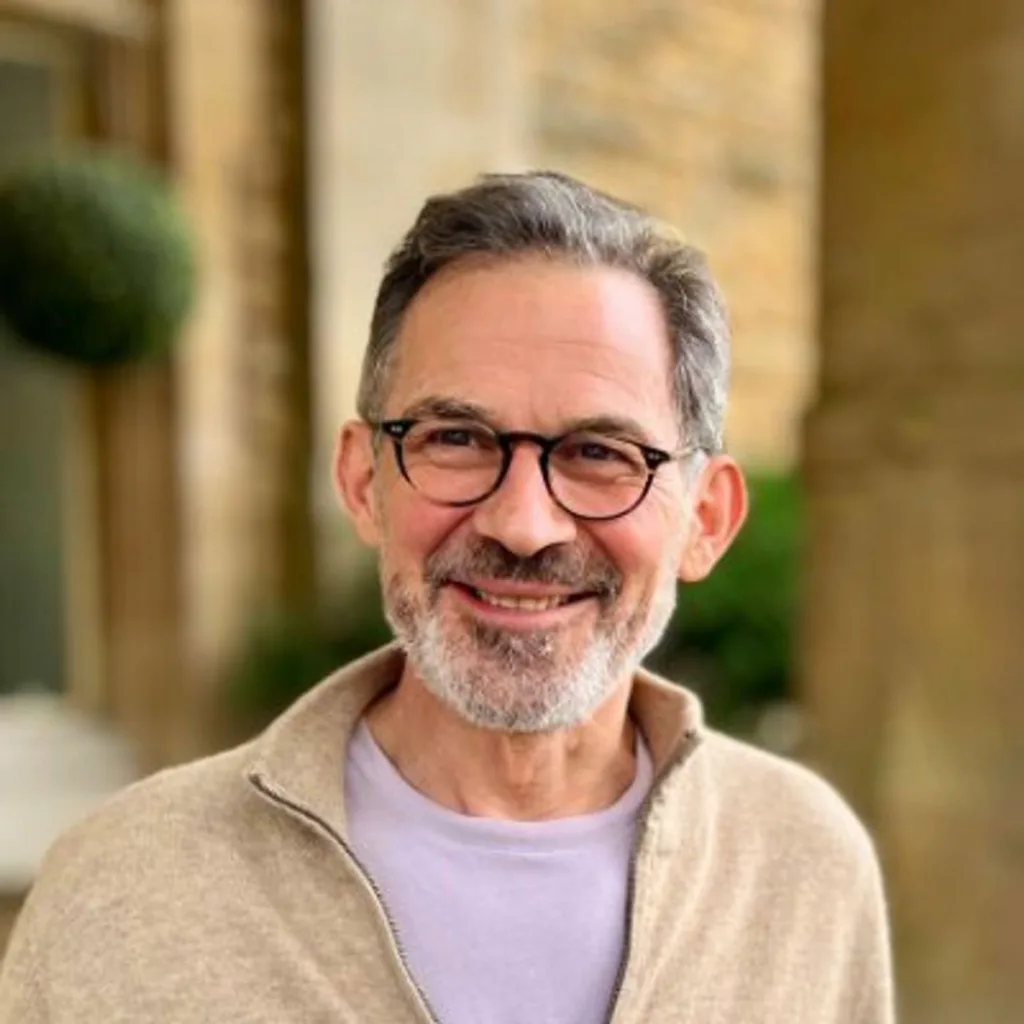
The Architecture of Presence: The Life, Art, and Non-Dual Teachings of Rupert Spira
The quest to understand the nature of reality and human consciousness has historically been divided into two primary paths: the objective pursuit of science and the subjective inquiry of spirituality. Yet, in the contemporary landscape of modern philosophy and mindfulness, a profound synthesis has emerged through the teachings of non-duality. At the forefront of this movement is Rupert Spira, an English spiritual teacher, author, and ceramic artist whose work bridges the gap between ancient Eastern philosophy and the modern Western mind.
Spira’s approach, deeply rooted in the Advaita Vedanta tradition, is known as the “Direct Path.” It bypasses complex rituals, decades of esoteric meditation practices, and dogmatic beliefs, inviting individuals to investigate their own immediate, firsthand experience. Through his writings, public inquiries, and extensive media presence, Spira offers a clear, coherent, and accessible framework for recognizing the true nature of the self—a nature he defines not as a fragile, limited ego, but as the timeless, limitless field of consciousness itself.
Time Is Never Actually Experienced
How Can Space-Time Fit Into Dimensionless Consciousness?
Collapsing the Distance Between God and Ourself
Early Life and Artistic Foundations: The Shaping of a Visionary
Rupert Spira was born in London in 1960. From an early age, he exhibited a deeply reflective temperament and an innate interest in the underlying mechanics of existence. At just fifteen years old, his spiritual journey began in earnest when he encountered the teachings of the classical Advaita Vedanta tradition through the work of the Shankaracharya order, a lineage he studied deeply for the next twenty years under the guidance of Dr. Francis Roles and Sri Shantananda Saraswati. During this formative period, he immersed himself in the practice of mantra meditation, the study of sacred Sanskrit texts, and the systematic investigation of self-enquiry.
Concurrently, Spira pursued a parallel passion in the visual arts. He trained as a ceramic artist, studying under legendary potters Henry Hammond and Michael Cardew at the West Surrey College of Art and Design, and later operating as an apprentice to John Maltby. By the mid-1980s, Spira established his own pottery studio in Shropshire, and later moved his practice to Devon.
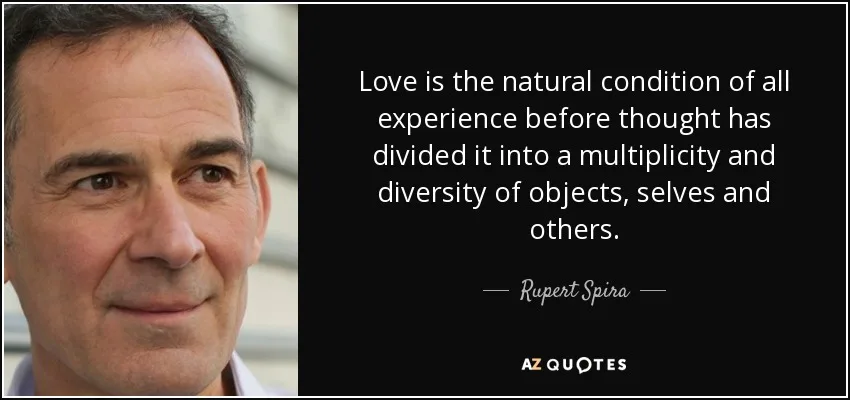
Spira’s ceramics quickly gained international renown. His minimalist, functional pottery—characterized by delicate forms, intricate monochrome glazes, and inscribed poems—was deeply reflective of his internal state. His art was not a distraction from his spiritual inquiry, but a physical manifestation of it. Working with clay required an absolute absorption in the present moment, a tactile dialogue between the creator, the medium, and the space within the vessel. Today, his ceramic masterpieces are preserved in public and private collections worldwide, including the Victoria and Albert Museum and the Sainsbury Centre for Visual Arts.
The Spiritual Turning Point: Realization via the Direct Path
While Spira achieved immense success in the art world, his internal investigation into the nature of consciousness remained his primary driver. The definitive turning point in his spiritual life occurred in the late 1990s when he encountered the teachings of the Indian sage Atmananda Krishna Menon, as transmitted through the brilliant French philosopher and spiritual teacher Francis Lucille.
Lucille introduced Spira to the “Direct Path” to realization. Unlike the progressive paths he had studied for two decades—which viewed enlightenment as a distant goal to be reached through rigorous mental discipline and the gradual purification of the mind—the Direct Path asserted that our true nature is already present, fully realized, and available in this exact moment.
Is Life Predetermined or Are We Free to Choose?
The Teaching That Cannot Be Taught
What Is Reality?
Under Lucille’s guidance, Spira underwent a profound shift in perception. He realized that the feelings of separation, anxiety, and existential lack that plague the human condition are rooted in a fundamental misunderstanding: the belief that consciousness is trapped inside a physical skull, looking out at a separate, external world. Through radical, experiential self-enquiry, Spira saw that there is no dividing line between the observer and the observed. This profound realization ultimately led him to transition from a full-time artist to a full-time teacher of non-duality, dedicating his life to articulating this liberating truth for others.
The Core Philosophy: The Nature of Consciousness
At the heart of Rupert Spira’s teachings is a deceptively simple question: What is it that is aware of your experience right now?
Spira invites us to examine our immediate experience rather than relying on scientific theories or religious doctrines. When we look closely at our lives, we notice that thoughts, emotions, bodily sensations, and external perceptions are constantly changing. Joy arises and subsides; anxiety builds and fades; the physical body ages and transforms. However, Spira points out that there is one element of our experience that never changes: the background of aware presence that witnesses these fluctuations.
Spira breaks down his non-dual philosophy into several foundational pillars:
The Illusion of the Separate Self
The modern world is built on the assumption that we are separate entities—an “I” inside the body, interacting with a “you” outside the body. Spira refers to this as the “contracted self” or the ego. He posits that this separate self is not a solid object, but a continuous activity of thinking and feeling. When this activity is investigated, it is found to have no independent substance.
Consciousness as the Primary Reality
Materialist science often claims that the brain generates consciousness. Spira reverses this paradigm, aligning with the philosophical stance of idealism. He argues that we have never actually encountered a physical world outside of consciousness. Every sight, sound, texture, and thought is known in and by consciousness. Therefore, consciousness is the primary stuff of reality—the screen upon which the movie of life is projected.
If Love Is My True Nature, Why Do I Dislike Some People?
How Do I Move from Understanding to Knowing?
Who We Really Are and the Nature of Reality
The True Source of Happiness
Humans naturally seek peace and happiness through external means—relationships, wealth, status, and sensory experiences. Spira asserts that objects can never provide lasting fulfillment; they merely offer a temporary pause in the mind’s relentless seeking. True peace, he teaches, is the very nature of consciousness itself. It is not something to be acquired, but rather something to be revealed when the mind stops agitatedly looking outward and rests back into its own source.
Major Published Works and Literature
Rupert Spira’s literary contributions form a comprehensive, step-by-step guide to the experiential understanding of non-duality. His writing style is noted for its clinical precision, poetic clarity, and absence of esoteric jargon.
- The Transparency of Things: Contemplations on the Nature of Experience (2008): Spira’s debut book serves as a foundational text for modern non-dual inquiry. It consists of a series of essays designed to systematically dismantle the belief in a separate, material world, guiding the reader toward the direct realization of experiential oneness.
- Presence (Volumes 1 and 2, 2011): In these extensive volumes, sub-titled The Art of Peace and Happiness and The Intimacy of Creativity and Love, Spira explores the profound implications of non-dual realization on everyday human life, emotional healing, relationships, and creative expression.
- The Ashes of Love (2014): A collection of aphorisms, short sayings, and poetic insights, this book distills the essence of Spira’s teachings into concise, meditative phrases designed to give the reader an immediate glimpse of timeless presence.
- The Nature of Consciousness: Essays on the Unity of Mind and Matter (2017): This landmark work represents Spira’s formal contribution to the global philosophical debate regarding the “hard problem” of consciousness. He argues that the materialist worldview is the root cause of the current psychological, social, and ecological crises, proposing that an understanding of consciousness as the ultimate reality is the only true remedy.
- Being Aware of Being Aware (2017): The first volume of The Essence of Meditation Series, this concise book focuses entirely on the simplest and highest form of meditation: the mind turning its attention away from objective thoughts and sensations, and instead resting in its own essential being.
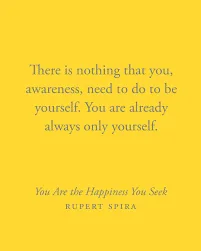
- You Are the Happiness You Seek (2022): Designed as an accessible entry point for a broader audience, this book explores how our universal desire for happiness can only be fulfilled by recognizing that the peace we crave resides within our own aware presence.
Documentaries and Media Features
Spira has been featured in numerous spiritual and philosophical documentaries, including The Science and Nonduality (SAND) conference films, which seek to bridge the gap between quantum mechanics, neuroscience, and ancient spiritual traditions. His long-form conversational style has also made him a highly sought-after guest on prominent global podcasts, including Buddha at the Gas Pump (BATGAP), The Rich Roll Podcast, and various mainstream psychological and philosophical forums.
The Digital Sanctuary: Official Web Presence
For those wishing to engage with Rupert Spira’s work in a structured and verified manner, his official web architecture serves as the definitive ecosystem:
- Official Website (rupertspira.com): The central portal for his global community. The website offers access to an extensive digital library containing hundreds of guided meditations, written essays, an integrated event calendar for upcoming physical and virtual retreats, and a dedicated online store for his books and audio collections.
- The Rupert Spira App: Developed to provide an intimate, daily meditative practice for users, the mobile application provides curated pathways, thematic meditation series, and direct access to Spira’s live-streamed webinars, making it a portable sanctuary for modern mindfulness.
Conclusion: The Timeless Relevance of the Direct Path
Rupert Spira’s transition from a master ceramicist to a world-renowned spiritual guide highlights a profound consistency of purpose: the dedication to revealing the beauty, intimacy, and structural perfection of existence. By translating the profound, ancient truths of non-duality into a logical, rational, and deeply comforting language for the 21st-century mind, Spira has demystified the path to spiritual awakening.
He reminds us that the peace, fulfillment, and connection we seek in the external world are not treasures hidden at the end of a long, grueling journey or behind the walls of an ashram. They are the native attributes of the very consciousness that reads these words right now. In an increasingly fragmented and anxious world, Spira’s teachings stand as a luminous, accessible invitation to step out of the illusion of separation and rest deeply in the quiet sanctuary of our own essential being.