

Rumi
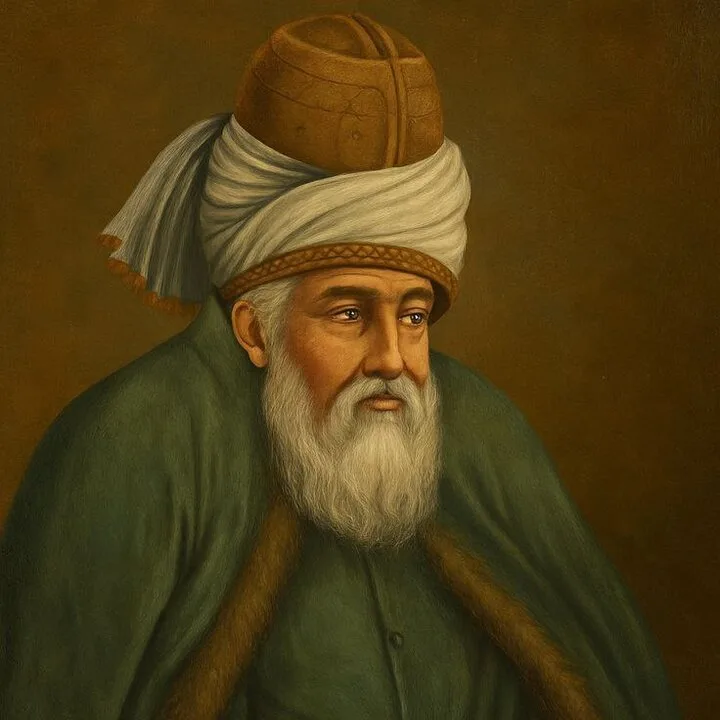
The Ocean of Longing: The Life, Mystical Works, and Universal Legacy of Jalāl al-Dīn Muḥammad Rūmī
Jalāl al-Dīn Muḥammad Balkhī (30 September 1207 – 17 December 1273), known across the Western world as Rumi and in the East as Mawlānā (“Our Master”) or Mevlevî, stands among the most luminous intellects and visionary poets in human history. Writing predominantly in classical Persian, Rumi produced a body of work that dissolved regional, linguistic, and doctrinal boundaries.
Centuries after his physical passing in medieval Anatolia, Rumi’s poetic and spiritual output remains a global phenomenon. His verses are celebrated by literary scholars, Sufi practitioners, and contemporary readers worldwide, cementing his status as one of the best-selling poets in modern publishing history.
Rumi (Mewlana) didn’t just write poetry; he wrote a map to the Divine. Whether you are seeking meditation music, spiritual awakening, or a moment of deep silence, let these verses be your guide.
| My favorite documentary below is “The Real Rumi | His Complete Philosophy Beyond Instagram“- Author’s remark ||
RUMI: Poet of the Heart 1998
Rumi documentary – English-مولانا و رقص سماع
The Real Rumi | His Complete Philosophy Beyond Instagram
Biography: From Jurisprudence to Ecstatic Mysticism
Early Life and Migrations
Rumi was born on September 30, 1207, in the town of Wakhsh (situated in modern-day Tajikistan) near the prominent cultural hub of Balkh in Greater Khorasan (modern-day Afghanistan). His father, Bahāʾ al-Dīn Walad, was a distinguished theologian, jurist, and Sufi mystic who bore the honorific Sulṭān al-ʿUlamāʾ (“Sultan of Scholars”).
Fleeing the westward advance of Genghis Khan’s Mongol armies, Bahāʾ al-Dīn led his family on an extensive migration across Central and Western Asia. Their travels traversed major intellectual centers, including Samarkand, Baghdad, Mecca, and Damascus. Around 1228, the family accepted an invitation from the Seljuk Sultanate of Rūm to settle in Konya (in present-day Turkey). The city was a cosmopolitan crossroads where Persian, Arabic, Turkish, Greek, and Armenian traditions converged. It was from this geographical region (Rūm, referring to Byzantine Anatolia) that Jalāl al-Dīn earned the epithet Rūmī.
┌─────────────────────────────────────────────────────────────────────────────┐
│                       The Journey of Mawlānā Rūmī                           │
│                                                                             │
│  [Wakhsh / Balkh]  ──►  [Baghdad & Mecca]  ──►  [Damascus]  ──►  [Konya]   │
│   Born Sept 1207         Fleeing Mongol            Study &       Settled ~1228  │
│                          Advances ~1215            Travels       Died Dec 1273  │
└─────────────────────────────────────────────────────────────────────────────┘
RUMI — “Stop acting so small. You are the universe in ecstatic motion”
Rumi On The Secret Path Of Divine Love
Rumi Drops Of Enlightenment
The Academic and Legal Scholar

Following his father’s death in 1231, Rumi assumed the leadership of the local madrasa (religious academy) at the age of twenty-four. He underwent rigorous training under Burhan al-Din Muhaqqiq Termathi, one of his father’s direct disciples, mastering Islamic jurisprudence (fiqh), Quranic hermeneutics, Arabic literature, and classical theology. By his mid-thirties, Rumi had established himself as a respected legal authority (mufti) and scholar surrounded by hundreds of devoted disciples in Konya.
The Encounter with Shams-i Tabrīzī
On November 29, 1244, Rumi’s academic life experienced a profound transformation upon meeting Shams-i Tabrīzī, an itinerant, iconoclastic Sufi dervish. Shams challenged Rumi to transcend bookish erudition, steering him toward direct, experiential realization of divine love. The two formed an intense spiritual companionship, entering periods of prolonged isolation (khalwa) to explore mystical states.
This transformation aroused envy and resentment among Rumi’s disciples. In 1248, Shams disappeared permanently—a event widely attributed by biographers to his assassination by a group of townspeople and disgruntled disciples. Rumi’s intense grief over this loss galvanized his poetic voice. Realizing that Shams was an outward mirror of the divine light within himself, Rumi transformed his sorrow into thousands of ecstatic verses, spending his remaining three decades composing poetry, preaching universal love, and guiding spiritual seekers until his death on December 17, 1273.
Become Light – A Soulful Poem by Rumi | Transform Your Soul into Light
Top 5 Rumi Poems for the Soul | The Best of Poetry for Heart
Rumi Documentary; Everything You Need to Know
Major Literary Works and Corpus
Rumi’s preserved writings total over 60,000 verses along with several prose compilations. His work is divided into poetic masterworks and prose discourses.
                               ┌──────────────────────────────────────────────┐
                               │             Rumi's Major Works               │
                               └──────────────────────┬───────────────────────┘
                                                      │
         ┌────────────────────────────────────────────┼────────────────────────────────────────────┐
         │                                            │                                            │
         ▼                                            ▼                                            ▼
┌─────────────────┐                          ┌─────────────────┐                          ┌─────────────────┐
│     Masnavi     │                          │  Divan-e Shams  │                          │   Fihi Ma Fihi  │
│ (25,000+ Verses)│                          │ (Lyric Poetry)  │                          │ (Prose Discourses)│
└─────────────────┘                          └─────────────────┘                          └─────────────────┘
SEMA: A Cinematic Journey into Rumi & The Whirling Dervishes
Rumi: Authentic Mevlana Whirling Sema Dervish Dance Complete Video in Konya Turkey
How to be Rumi without a Cultural Identity – Shaikh Kabir Helminski
1. Masnavi-ye Ma’navi (“Spiritual Couplets”)
Considered Rumi’s definitive masterpiece, the Masnavi is a six-volume poetic epic containing over 25,000 rhyming couplets. Composed in Persian during the final fifteen years of his life, Rumi dictated the verses to his favored disciple, Husam al-Din Chalabi.
The work opens with the famous Nay-Nama (“Song of the Reed”):
“Hearken to this reed forlorn, telling its story of separations…”
Through an intricate web of parables, animal fables, Quranic commentary, historical anecdotes, and mystical instruction, the Masnavi explores the soul’s exile from its Divine origin and charts the inner path of return. It is often described in the Eastern Islamic world as “the Quran in the Persian tongue” (Qur’an-e Pahlavi).
2. Divan-e Shams-e Tabrizi (“The Collected Poems of Shams of Tabriz”)
Also referred to as Divan-i Kabir, this massive collection contains over 3,000 lyric ghazals (love poems) and nearly 2,000 rubaiyat (quatrains). Unlike standard poetic collections of the era, Rumi frequently signed these poems with the name of Shams of Tabriz rather than his own, signaling the complete dissolution of his personal ego into the spiritual persona of his mentor.
3. Prose Collections

- Fihi Ma Fihi (“In It What Is In It”): A compilation of 71 informal conversations and lectures delivered by Rumi to his disciples and visiting officials, offering direct insights into his philosophical views.
- Majalis-i Sab’a (“Seven Sermons”): The transcribed texts of seven formal public sermons delivered by Rumi in Konya mosques.
- Maktubat (“The Letters”): A collection of approximately 145 formal letters written by Rumi to political leaders, patrons, and family members regarding social, community, and financial matters.
Rumi – The Most Famous Sufi Poet in the World
The Complete Life of Rumi: 13th Century Mystic Poet | Bedtime Biography
Rumi’s Wisdom for the Heart and Mind | Audiobook
Philosophical Foundations and Sacred Movement
Rumi’s underlying philosophy rests on the Islamic principle of Tawhid (the ultimate Oneness of God), expressed through the dynamics of spiritual longing (‘ishq).
| Core Concept | Description |
| Separation and Union | The fundamental human condition is one of exile from the Divine Source; spiritual life is the intentional movement toward reunion. |
| Annihilation of Self (Fana) | The ego (nafs) is the primary barrier to truth. By burning away self-regard in the fire of divine love, the seeker awakens to reality. |
| Universal Inclusivity | God transcends institutional boundaries and rigid dogmas; true devotion is measured by the purity of the heart. |
| Audition and Movement (Sama) | Music, poetry, and bodily rotation are spiritual vehicles used to quiet intellectual chatter and align the soul with cosmic movement. |
Following Rumi’s death, his son Sultan Walad systematically organized his father’s followers into the Mevlevi Sufi Order. The order became famous for the Sema—the ritual whirling ceremony where practitioners rotate around a central axis while turning toward the Divine, a practice recognized on UNESCO’s Representative List of the Intangible Cultural Heritage of Humanity.
Rumi: 2 Hours of the Greatest Secrets for the Soul (Sufi Poetry & Healing Music)
The Strange Life Story of Rumi w. Sharghzadeh
Travels of Rumi | Episode 1 | Rumi Series
Scholarly Editions, Modern Translations, and Critical Debate
The reception of Rumi’s poetry in the English-speaking world is characterized by distinct translation methodologies:
                            ┌──────────────────────────────────────────────┐
                            │        English Translation Traditions        │
                            └──────────────────────┬───────────────────────┘
                                                   │
         ┌─────────────────────────────────────────┴─────────────────────────────────────────┐
         │                                                                                   │
         ▼                                                                                   ▼
┌─────────────────────────────────┐                                 ┌─────────────────────────────────┐
│     Academic & Philological     │                                 │     Interpretive & Free-Verse   │
│  (R.A. Nicholson, A.J. Arberry, │                                 │   (Coleman Barks, Robert Bly,   │
│   Franklin Lewis, Jawid Mojaddedi)│                                 │    Kabir & Camille Helminski)    │
└─────────────────────────────────┘                                 └─────────────────────────────────┘
- Reynold A. Nicholson (1868–1945): The Cambridge scholar produced the first complete critical Persian text, an eight-volume English prose translation, and commentary on the Masnavi between 1925 and 1940. Nicholson’s literal translation remains the primary foundation for modern scholarly research.
- Arthur J. Arberry (1905–1969): A student of Nicholson who produced seminal translations of Rumi’s ghazals (Mystical Poems of Rumi) and prose (Discourses of Rumi).
- Coleman Barks: Beginning in the late 1970s, Barks rendered Nicholson and Arberry’s literal prose into free-verse English poems (most notably The Essential Rumi). While these versions propelled Rumi to best-seller status in North America, scholars such as Franklin Lewis have noted that popular adaptations frequently obscure Rumi’s Islamic context and Quranic references.
- Modern Scholarly Translators: Contemporary scholars like Franklin D. Lewis (Rumi: Past and Present, East and West) and Jawid Mojaddedi (Oxford World’s Classics rhymed translations of the Masnavi) seek to balance poetic accessibility with strict fidelity to the original Persian meter and theological context.
Documentaries

Notable Documentaries and Educational Films
- Rumi: Poet of the Heart (1998): Directed by Haydn Reiss, featuring commentaries by scholars, poets, and translators including Coleman Barks, Huston Smith, and Robert Bly.
- Rumi – Turning Ecstatic (2005): A documentary examining the global resonance of Rumi’s poetry and the contemporary practice of the Mevlevi order.
- SEMA: A Film about Rumi & The Whirling Dervishes of Turkey: A docu-series production exploring the historic roots of the Mevlevi tradition in Konya.
Key Reference Sources and Web Resources
- Ganjoor Digital Library (ganjoor.net): The premier online archive hosting the complete Persian texts of Rumi’s Masnavi, Divan, and prose works.
- Dar-al-Masnavi (dar-al-masnavi.org): Maintained by scholar Ibrahim Gamard, offering scholarly literal translations alongside original Persian texts and historical notes.
- Mevlana.com: The official portal maintained by the Mevlevi order providing historical documentation, translation guides, and updates on Mevlevi cultural events.
- Encyclopædia Iranica: Contains extensive, peer-reviewed entries on Rumi’s biography, manuscript traditions, and poetic meter.
- The British Library Manuscripts Collection: Holds early medieval illuminated manuscripts of the Masnavi and Divan-e Shams.
- UNESCO Intangible Cultural Heritage Portal: Features archival recordings, documentation, and history of the Mevlevi Sema ceremony.
- Sufism & Spirituality Archives (spiritualityandpractice.com): Provides curated reviews of multimedia materials and literature regarding Rumi.
- The Persian Language Foundation: Offers linguistic analyses and audio recitations of classical Persian verse.
- International Mawlana Rumi Foundation: Dedicated to promoting intercultural dialogue through Rumi’s philosophical works.
- Oxford World’s Classics Digital Portal: Hosts critical apparatus and translated editions of the Masnavi by Jawid Mojaddedi.
Rumi’s enduring legacy lies in his capacity to transform personal grief into universal spiritual wisdom. By locating the sacred not in external forms but within the purified human heart, his poetry continues to offer a message of unity, reconciliation, and profound love across centuries and cultures.